Water damage can occur suddenly due to heavy rainstorms, burst pipes, leaking appliances, or sewage backups. If not handled quickly, standing water can lead to mold growth, structural damage, electrical hazards, and costly repairs. Acting fast is critical to minimize the damage and restore your property safely.
Professional water damage restoration services help homeowners remove excess water, dry affected areas, disinfect contaminated surfaces, and repair damaged structures. In this guide, we’ll walk you through the immediate steps homeowners should take after water damage and explain how professionals handle the restoration process.
Immediate Steps After Water Damage: What Homeowners Should Do
Experiencing a flooded home can be overwhelming. However, taking the right steps immediately can help prevent further damage.
According to experts at Bayco Builders & Restoration, acting quickly and safely can significantly reduce the cost and complexity of water damage restoration.
Below is a step-by-step guide to help you respond effectively.
Step 1: Turn Off the Electricity
Safety should always come first. Water and electricity are a dangerous combination that can lead to electrical shock or fire hazards.
Turn off the electricity to the affected area from your electrical panel. If the panel is located in a flooded area, avoid entering the space and contact a professional electrician instead.
Step 2: Stop the Source of Water
Once the area is safe, try to stop the water source if possible. If the damage is caused by a burst pipe, leaking appliance, or plumbing issue, shut off the main water valve immediately to prevent further flooding.
Stopping the water source helps limit damage and makes the restoration process easier.
Step 3: Contact Water Damage Restoration Professionals
After ensuring safety and stopping the leak, contact a professional water damage restoration company as soon as possible.
Experts such as Bayco Builders & Restoration have specialized equipment like industrial pumps, moisture meters, and commercial dehumidifiers that allow them to quickly remove water and prevent long-term structural damage.
The sooner professionals begin the restoration process, the better the chances of saving flooring, drywall, furniture, and personal belongings.
Step 4: Document the Damage
Before cleanup begins, take clear photos and videos of the affected areas. Documenting the damage helps support insurance claims and provides proof of the extent of the loss.
Capture images of:
- Standing water
- Damaged walls and flooring
- Furniture and appliances
- Any visible mold or structural damage
Step 5: Protect Valuables and Important Items
If it is safe to do so, move valuable belongings away from the flooded area. Items such as electronics, important documents, rugs, and small appliances should be relocated to dry spaces.
Quick action can help prevent permanent damage to personal belongings.
How Professionals Handle Water Damage Restoration
Once the restoration team arrives, they follow a structured process to fully restore your home after water or flood damage. Professional water damage restoration services involve several stages designed to remove moisture, repair flood-damaged areas, disinfect affected surfaces, and restore damaged structures.
Step 1: Damage Inspection and Assessment
The first step is a thorough inspection of the affected areas. Technicians assess the severity of the water damage and determine the type of water involved.
Water is typically categorized into three types:
- Clean Water – from broken pipes or rainwater
- Gray Water – from appliances like washing machines or dishwashers
- Black Water – contaminated water from sewage backups or flooding
Understanding the water type helps determine the proper restoration approach.
Step 2: Water Extraction
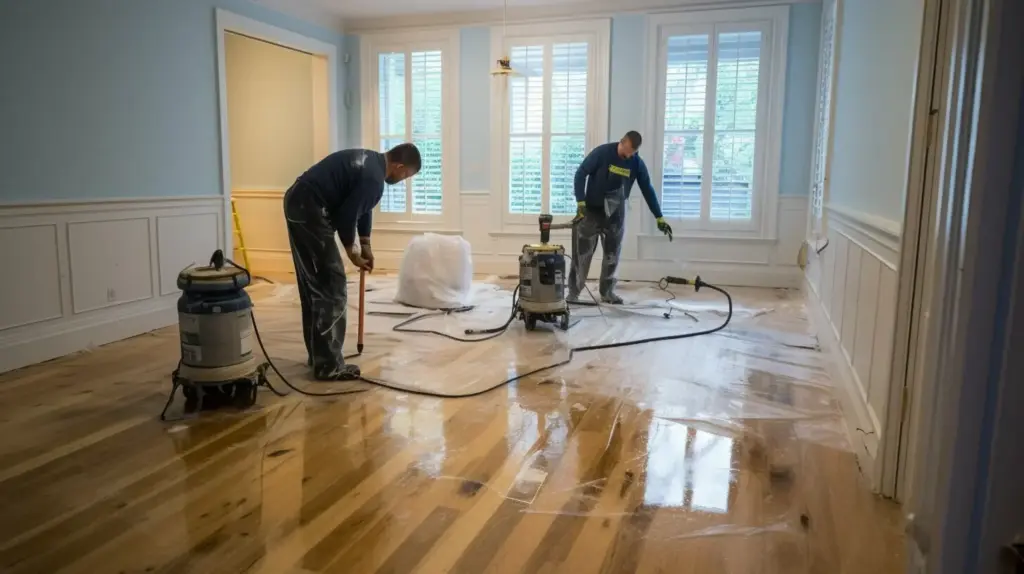
Next, technicians use powerful pumps and industrial vacuums to remove standing water from the property.
Fast water extraction is essential because prolonged exposure to moisture can damage flooring, weaken drywall, and promote mold growth.
Step 3: Drying and Dehumidification
After removing standing water, professionals begin the drying process using high-capacity air movers and commercial dehumidifiers.
This step removes hidden moisture trapped in walls, ceilings, carpets, and furniture. Proper drying is critical to prevent mold growth and long-term structural damage.
Step 4: Cleaning and Sanitizing
Once the area is dry, restoration specialists clean and disinfect all affected surfaces using specialized antimicrobial treatments.
This process helps eliminate bacteria, odors, and contaminants caused by floodwater exposure.
Items that cannot be restored may be safely removed and disposed of during this stage.
Step 5: Restoration and Repairs
The final stage involves repairing or rebuilding damaged parts of the property.
Depending on the extent of the damage, restoration may include:
- Drywall repairs
- Flooring replacement
- Cabinet restoration
- Structural rebuilding
Some projects may take only a few days, while more severe damage may require several weeks of repairs.
Conclusion
Water damage emergencies can happen without warning, but responding quickly can make a significant difference in protecting your home. Turning off electricity, stopping the water source, documenting the damage, and contacting professionals are the most important first steps.
Experienced restoration specialists like Bayco Builders & Restoration use advanced equipment and proven techniques to remove water, dry affected areas, sanitize surfaces, and fully restore damaged properties.
If you experience flooding or water damage, seeking professional water damage restoration services as soon as possible can help prevent mold growth, structural issues, and costly repairs.
FAQs
When should I call water damage restoration professionals?
You should contact professionals immediately after discovering water damage. Fast action helps prevent mold growth and reduces long-term repair costs.
Do I need to leave my home during the restoration process?
In severe cases involving contamination, extensive drying equipment, or structural repairs, temporary relocation may be recommended for safety.
How long does water damage restoration take?
Minor water damage may take a few days to repair, while extensive flooding or structural damage may require several weeks.
Does homeowners’ insurance cover water damage restoration?
Insurance coverage depends on the cause of the damage. Sudden incidents like burst pipes are often covered, while gradual leaks may not be.
What are the most common causes of water damage?
Common causes include burst pipes, leaking appliances, heavy rainfall, clogged drains, roof leaks, and sewage backups.