Water damage can quickly become a serious problem for homeowners when moisture spreads through floors, walls, ceilings, and personal belongings. Whether caused by leaking pipes, storms, overflowing appliances, or flooding, water intrusion can weaken structural materials and create additional issues if it is not handled properly. Professional water restoration services help homeowners remove moisture, repair affected areas, and restore their property to a safe and comfortable condition. At Bayco Builders & Restoration, we provide reliable restoration solutions focused on helping homeowners recover from water damage with efficient service, careful attention, and professional restoration methods.
Every water damage situation is different, and the required restoration process depends on the source of the water, the size of the affected area, and how long the moisture has remained inside the property. From emergency response and water extraction to drying, cleaning, and repairs, professional restoration teams provide organized solutions that help reduce damage and protect the home. Understanding how restoration works allows homeowners to take the right steps when unexpected water problems occur.
How Does Water Damage Affect Your Home?
Water damage can impact different areas of a home depending on how much moisture enters the property and how long it remains untreated. Even a small amount of water can affect building materials, personal belongings, and the overall condition of the property.
Common effects of water damage include:
- Weakening of walls and structural materials
- Damage to flooring and ceilings
- Stains and discoloration on surfaces
- Moisture buildup in hidden areas
- Damage to furniture and belongings
- Unpleasant odors from damp materials
- Increased chances of mold growth
When water damage is not addressed quickly, these issues can become more serious and lead to expensive repairs. Understanding how water affects a home helps homeowners take timely action and protect their property.
What Are The Common Causes Of Water Damage?
Water damage can occur for many different reasons, and identifying the source is the first step toward proper restoration. Some problems may develop slowly, while others can cause immediate and extensive damage.
Common causes include:
- Burst or leaking pipes
- Overflowing sinks, toilets, or bathtubs
- Appliance leaks
- Roof leaks
- Storm damage
- Flooding
- Sewer backups
- Foundation water intrusion
Each type of water damage requires a different approach. For example, flood-related issues may require additional cleaning and safety measures, while a small plumbing leak may only affect a limited area.
How Does The Water Damage Restoration Process Work?
The water damage restoration process involves several steps designed to remove moisture, repair affected areas, and restore the property. Professionals begin by inspecting the damage, identifying the source of water, and determining the level of restoration required.
A typical restoration process includes:
Step 1: Initial Inspection And Damage Assessment
The first step is a detailed inspection of the affected property. Technicians evaluate the amount of water present, identify damaged materials, and locate areas where moisture may have spread.
This assessment helps create an effective restoration plan and determines which equipment and methods will be required.
Step 2: Water Removal And Extraction
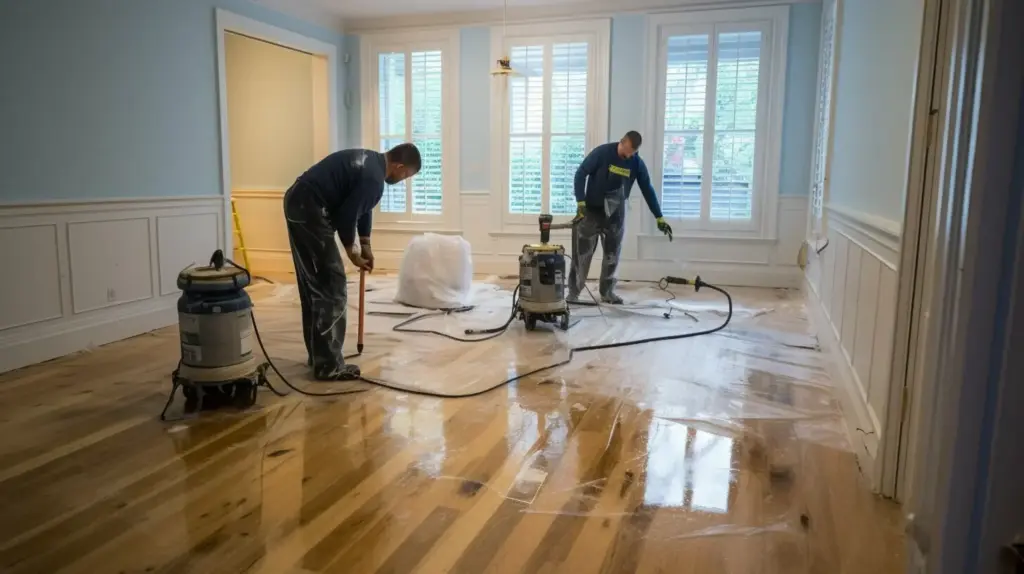
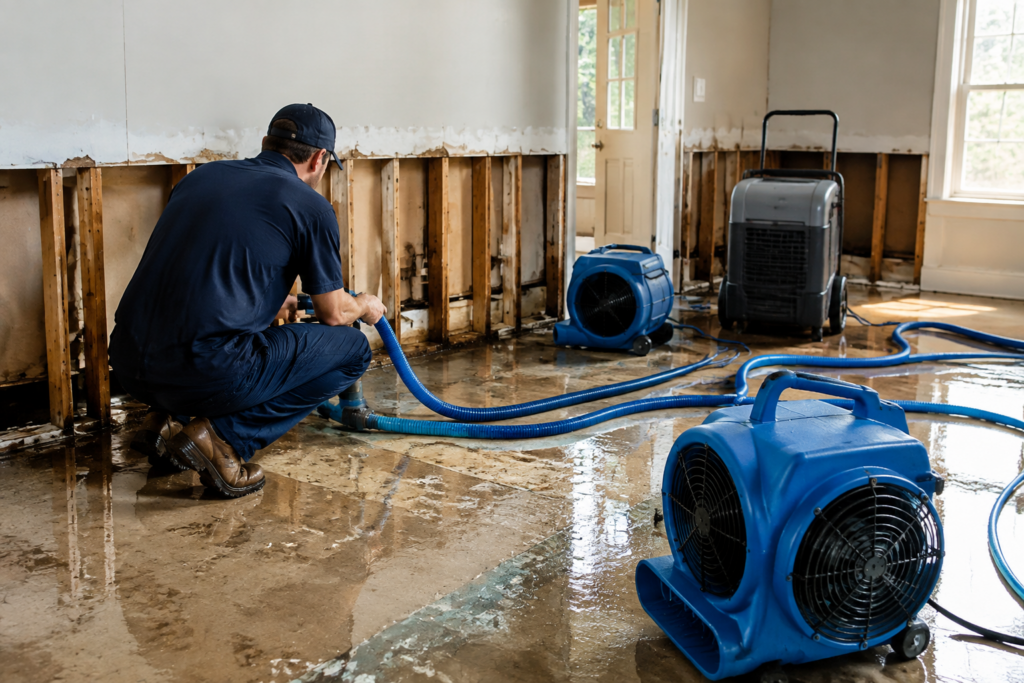
Standing water needs to be removed quickly to prevent additional damage. Professionals use specialized extraction equipment to remove water from floors, carpets, and other affected areas.
Fast water removal helps reduce the amount of moisture absorbed by building materials and allows the drying process to begin sooner.
Step 3: Drying And Dehumidification
After water extraction, remaining moisture must be removed from the property. Air movers, dehumidifiers, and moisture monitoring tools are used to dry walls, flooring, furniture, and other affected materials.
Proper drying helps prevent hidden moisture problems and prepares the property for repairs.
Step 4: Cleaning And Sanitizing
Water damage can leave behind dirt, bacteria, and unpleasant odors. Restoration professionals clean and sanitize affected surfaces to improve safety and restore the condition of the property.
This step is especially important when water has come from contaminated sources.
Step 5: Repairs And Property Restoration
Once the area is dry and clean, damaged materials can be repaired or replaced. Restoration may include repairing walls, flooring, ceilings, cabinets, and other affected areas.
The goal is to return the property to its previous condition while improving safety and comfort.
How Can Water Damage Repair Restore Your Home?
Professional water damage repair focuses on fixing the visible and hidden effects caused by moisture. Depending on the severity of the damage, repairs may include replacing damaged drywall, restoring flooring, repairing ceilings, and addressing affected structural components.
A proper repair process helps:
- Restore damaged surfaces
- Improve the appearance of affected areas
- Repair weakened materials
- Prevent ongoing moisture issues
- Return the property to normal use
Attempting repairs without identifying hidden moisture can lead to recurring problems. Professional evaluation ensures that damaged areas receive the correct treatment.
How Does Water Damage Affect Different Parts Of A Home?
Water can affect almost every area of a property depending on how far it spreads. Some materials absorb moisture quickly, while others may hide damage beneath the surface.
Common affected areas include:
- Walls and drywall
- Flooring and subfloors
- Ceilings
- Cabinets
- Furniture
- Carpets
- Insulation
- Electrical components
Understanding how water affects different materials helps determine the right restoration approach.
How Is Wall Water Damage Restored?
Walls are one of the most common areas affected by water intrusion. Moisture can enter drywall and remain hidden, causing swelling, stains, and deterioration.
Wall water damage restoration includes identifying affected sections, measuring moisture levels, drying the area properly, and repairing damaged materials. In some cases, damaged drywall may need replacement to ensure the wall remains safe and stable.
How Can You Fix Water Damage In A Home?
Fixing water damage in a home starts with identifying the source of the water and stopping it before additional damage occurs. Homeowners should first address leaks, broken pipes, or other causes of water intrusion to prevent moisture from spreading further. After the source is controlled, the affected areas should be inspected, standing water removed, and damaged materials evaluated.
The next steps involve thorough drying, cleaning, and repairing affected areas. Professional equipment such as water extraction tools, air movers, and dehumidifiers can help remove hidden moisture from walls, flooring, and other materials. Once the area is completely dry, damaged surfaces can be repaired or replaced to restore the condition of the home and reduce the risk of future problems.
How Can Restoration Prevent Long-Term Water Damage?
Water damage can continue affecting a home even after visible water has been removed. Hidden moisture inside walls, flooring, and other materials can lead to further deterioration if it is not properly addressed.
Proper restoration helps identify affected areas, remove remaining moisture, and repair damaged materials. By taking the right restoration steps, homeowners can reduce the risk of future problems and protect the overall condition of their property.
Restoring Damaged Floors, Walls, And Interior Areas
Water can affect different parts of a home, including flooring, drywall, ceilings, cabinets, and other interior surfaces. If these areas are not properly dried and repaired, moisture can continue affecting the strength and appearance of the property.
Professionals use specialized equipment and restoration methods to repair damaged areas and remove remaining moisture. Services such as wall water damage restoration help address affected wall sections, restore damaged materials, and improve the overall condition of the home.
Preventing Future Problems After Water Damage
A complete restoration process does not only focus on removing current damage but also helps reduce the chances of future issues. Identifying the source of water intrusion and repairing affected areas are important steps in protecting the property.
Proper drying, cleaning, and moisture control help maintain a healthier indoor environment. Professional mold prevention water damage restoration methods focus on reducing excess moisture and preventing conditions that may contribute to mold growth.
Bringing Your Home Back After Water Damage
Water damage can affect the safety, comfort, and condition of your home, but professional restoration helps recover the affected areas and return the property to a usable state. Experts focus on repairing damaged materials, addressing moisture concerns, and restoring the appearance of the home.
A complete restoration solution helps homeowners move forward after unexpected water damage by improving the condition of the property and reducing the chances of ongoing issues. With proper restoration support, the home can become safe, comfortable, and ready for everyday use again.
Why Expert Restoration Support Matters After Water Damage
Water damage restoration requires proper assessment, specialized equipment, and the right restoration techniques. Attempting to handle severe water damage without proper knowledge can leave behind hidden moisture, structural issues, and recurring problems. That is why choosing a trusted water damage restoration company in Fremont, CA is important for ensuring accurate evaluation, effective repairs, and complete property recovery. Restoration experts identify the extent of the damage and apply suitable solutions to restore your home safely and efficiently.
This is especially important because water damage can affect hidden areas such as walls, flooring, insulation, and structural materials. Experienced technicians understand moisture detection, drying methods, damage assessment, and repair requirements. The goal is always to provide reliable restoration solutions that protect the property, restore comfort, and help prevent future water-related issues.
Conclusion
Water damage restoration plays an important role in protecting your home after unexpected water intrusion. From removing moisture and repairing damaged areas to restoring affected surfaces, proper restoration helps bring the property back to a safe and comfortable condition. Quick action can reduce the extent of damage and prevent additional problems caused by prolonged moisture exposure.
At Bayco Builders & Restoration, we help homeowners recover from water damage with reliable restoration solutions designed around their property’s needs. Our team focuses on identifying damage, restoring affected areas, and helping homeowners return their homes to a safe and functional condition.
FAQs
1. How long does water damage restoration take?
The restoration time depends on the severity of damage, affected materials, and required repairs. Minor issues may take a few days, while larger damage can require more time.
2. Can water damage cause mold growth?
Yes, excess moisture can create conditions where mold may develop. Quick drying and proper restoration help reduce this risk.
3. What should I do after water damage occurs?
Stop the water source if possible, protect valuable belongings, and contact a restoration expert to assess and address the damage.
4. Can damaged walls and floors be restored after water damage?
Yes, affected walls, flooring, and other materials can often be repaired or replaced depending on the level of damage.
5. Is water damage restoration necessary after a small leak?
Even small leaks can create hidden moisture problems. An inspection helps determine whether restoration or repairs are needed.